Huayna Potosí Bolivia: Our Experiences
We attempted to climb Huayna Potosí in Bolivia. At an impressive 6,088 meters above sea level, this mountain is known as one of the easiest 6,000-meter peaks in the world. In this article, we describe our experiences climbing Huayna Potosí in Bolivia. Read on to find out whether we made it to the summit, plus some useful tips!
Our Journal: Climbing Huayna Potosí, Bolivia
Day 1: Taxi to Low Camp (4,800 m), ice climbing
On the first day, we walk to the office to collect our gear for the next few days: warm clothing, a 60L backpack, helmet, crampons, and an ice axe. Together with the sleeping bag and a few other items, the backpack weighs nearly 20 kilos. Once everything is packed, we drive to low camp at around 4,800 meters. We’re given lunch, and immediately afterward we head toward the glacier with all our gear, where we spend about an hour and a half learning the basics of walking and climbing on ice. Especially the ice wall (about 8 meters high) turns out to be much harder than it looks. It is incredibly exhausting at this altitude.
Day 2: Hike to High Camp (5,200 m), rest
Last night we may have slept on the dirtiest mattress ever (don’t expect much in a climbers’ hut), but surprisingly, inside our thick sleeping bags we slept quite long and well. After breakfast, we actually have nothing to do, because we don’t head to high camp until after lunch (the food, by the way, is very well organized). It’s only a short distance, but carrying 20 kilos on your back at this altitude still makes it a tough hike. Especially with the snowstorm that starts up just as we leave. Once we arrive, we try to sleep for a few hours, because tonight is when we’ll actually go for the summit.
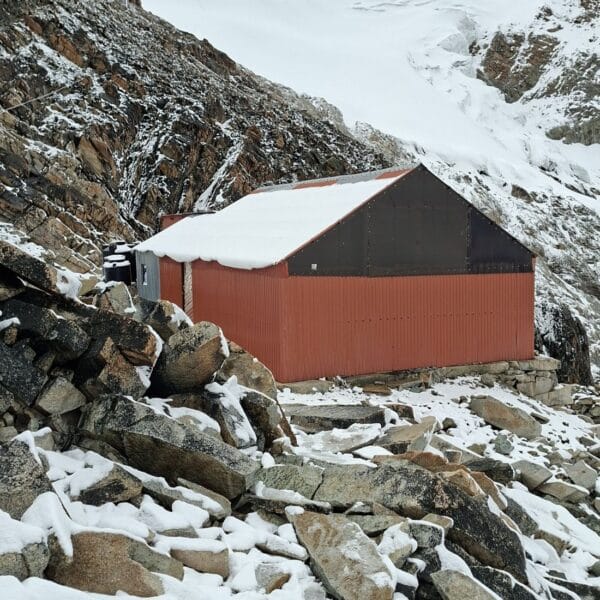

Day 3: Summit day!
Toward the summit
We will probably never feel more like real mountaineers than today. The alarm goes off extremely early, and after a very minimal breakfast (and even less sleep), we’re standing there fully geared up, ready to start. We set off at 1 a.m. With crampons on, we walk onto the glacier and follow the line of headlamps from fellow climbers through the pitch-black emptiness, all hoping to reach the summit at sunrise. You really do have to start this early, because once the sun comes up the ice begins to melt, making it too dangerous to cross the glacier.
The first few hours go fairly well. The trail across the glacier seems endless (sometimes steep, sometimes flat) and there’s about 20 centimeters of fresh snow, just to make things a bit more challenging. Before long, we’ve covered half the elevation gain, where a steeper section along an ice wall awaits us. Luckily, it’s still dark, so the drop beside us is less visible. We’re still walking uphill, but now we also have to use the ice axe.
The altitude slowly starts to take its toll. It’s around four o’clock, and we’re now at roughly 5,800 meters. Every step becomes slower. Fortunately, we’re not the only ones struggling. The first groups are already giving up and turning back (and for good reason). Still, we’re on schedule and have a bit of time left for a few short breaks. When the steep rock face of the final section comes into view, we decide to at least continue to 6,000 meters and then see how things go.
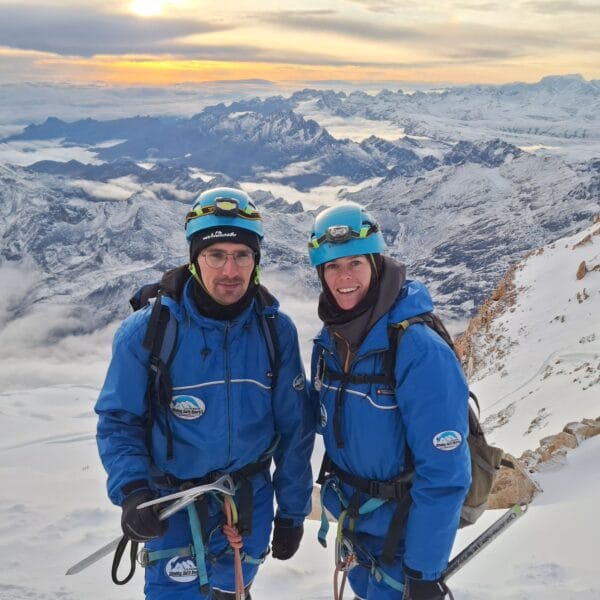

The final section of Huayna Potosí
Then suddenly, the end is in sight. The last steep section goes really well, the sun comes up, and we can see the summit. We’re actually going to make it! At around 6:10 a.m., we’re standing on top. It was one of the biggest challenges we’ve ever faced, but we did it! We have about fifteen minutes to look around and take some photos, and then we already have to start the descent. And honestly, all we want at that point is to breathe air with more oxygen as soon as possible.
The descent
The climb was extremely tough, but the descent is at least just as intense. Even though it’s all downhill, we still have to walk and scramble through the snow for kilometers, while you were already completely exhausted at the summit. And then we still have to go from high camp back to low camp with that massive 20-kilo backpack. Still, the route on the way back is incredibly beautiful. You can finally see where you climbed up during the night!
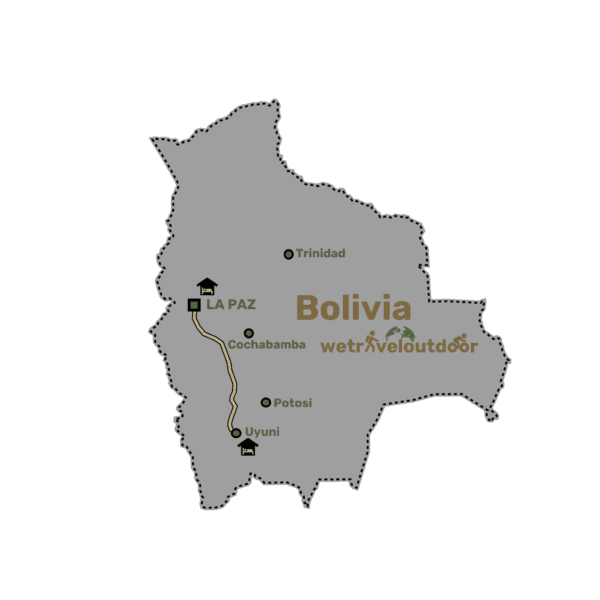
Around 11 a.m., we’re back at low camp, where a taxi picks us up right away. Completely exhausted but very satisfied, we arrive back in La Paz, where 3,600 meters suddenly feels like sea level, with so much oxygen in the air. It’s something you really have to experience yourself: this incredible adventure and ordeal rolled into one.
Tips for climbing Huayna Potosí in Bolivia
Based on our experiences, here are some tips for climbing Huayna Potosí:
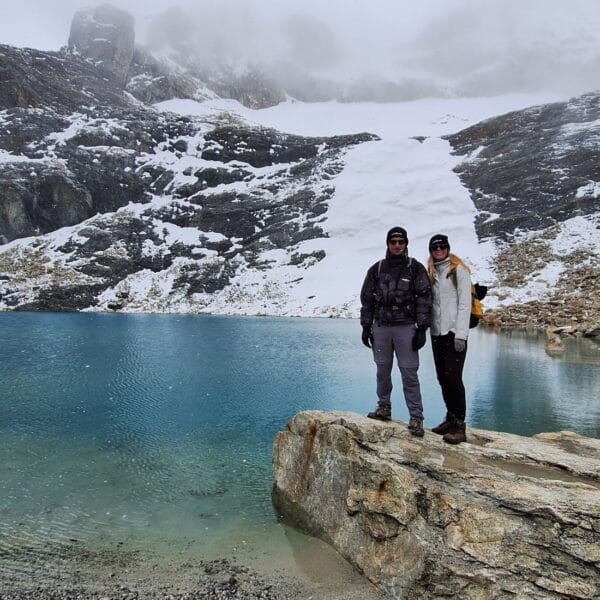
- Plan a few days for acclimatization in La Paz. We chose a day trip to Laguna Esmeralda, for example, because this hike goes up to an altitude of 5,000 meters. La Paz itself is also already quite high, especially if you’re traveling to Bolivia from Peru.
- Drink plenty of water during the climb. Staying hydrated helps reduce the risk of altitude sickness. Still, at an altitude of 6,000 meters, you should expect to experience at least moderate symptoms.
- Bring your own snacks. On summit day you’re given less food; during the night there’s only soup or a piece of cake. If you know you can eat reasonably well around midnight, we definitely recommend bringing extra snacks.
- Pay in US dollars with your tour operator. We suddenly had to pay more because we wanted to pay part of the amount in Bolivianos. According to the owner, this was due to an unfavorable exchange rate.
- Don’t bring too many personal items! The bag you eventually have to carry to high camp is heavy enough as it is, and you won’t be able to shower along the way anyway. We even slept in our base layers because it was quite cold at high camp. One thing we did use a lot was hand sanitizer. Conditions on the mountain are primitive, and washing your hands with ice-cold water isn’t ideal. Warm clothing layers are also definitely not a luxury, even though the tour operator will probably provide some gear. A fleece jacket and warm thermal bottoms are very nice to bring along.